While I consider myself a champion user of my computer now, it wasn’t always this way. My combined hearing and vision loss made me feel isolated – and because I had limited access to technology to stay in touch with my family, friends and community, I felt even more alone.
I’ve experienced significant hearing loss since childhood, and my vision has diminished over the past decade. As a result, I have frequent appointments at The John Hopkins Wilmer Eye Institute. During one visit, my therapist encouraged me to apply to iCanConnect, the National Deaf-Blind Equipment Distribution Program.
The program offers free equipment and training for people with both significant hearing and vision loss who meet disability and income eligibility guidelines.
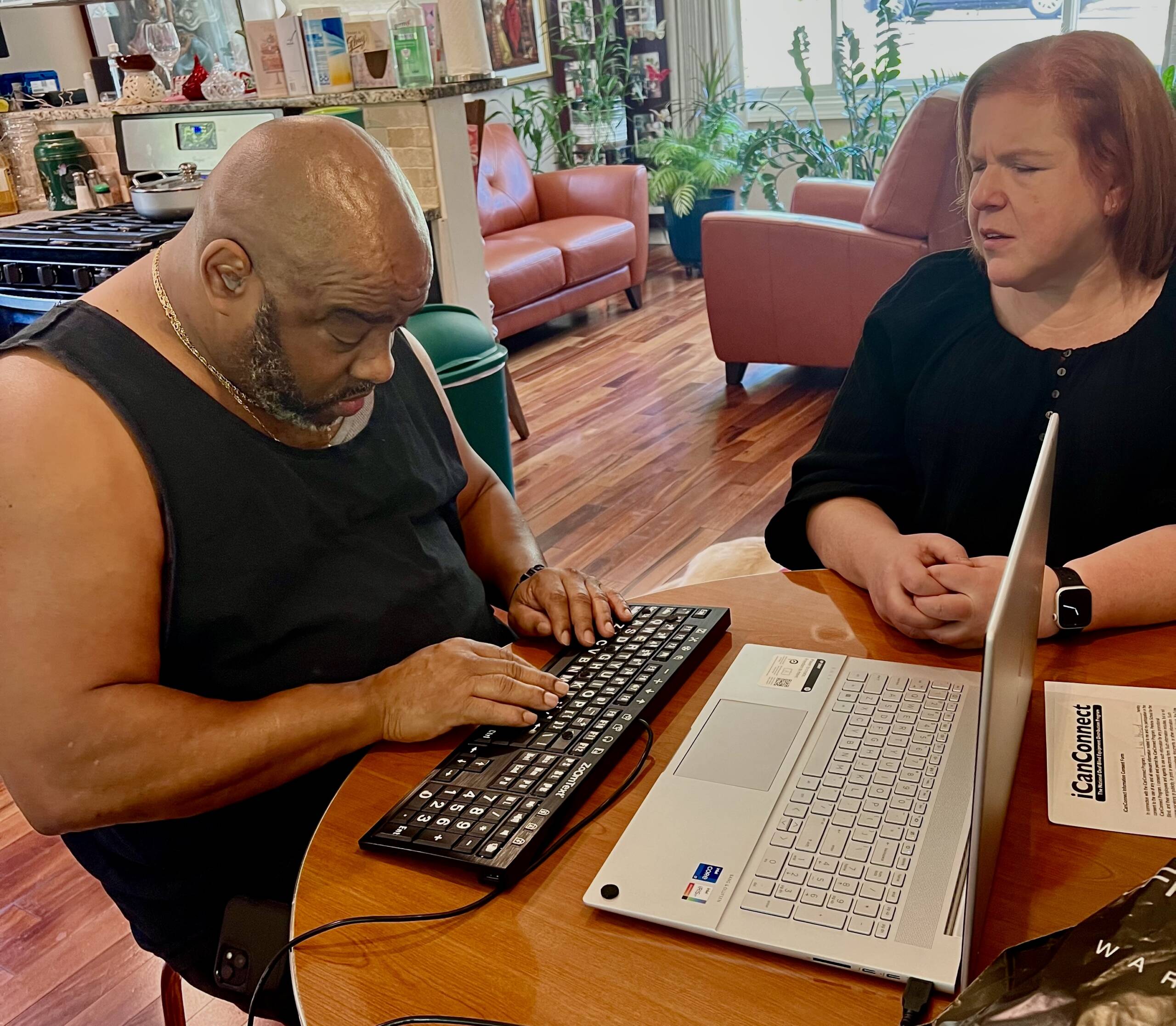
Once I was accepted, a local representative met with me to discuss my distance communication needs and goals. Through the program, I received a laptop with Fusion and a large-print ZoomText keyboard, as well as an iPhone and an external Bluetooth keyboard. Then Lisa Howard, my iCanConnect trainer, met with me in-person to train me how to use it.
Getting reconnected to community with iCanConnect
Now I have a way to stay in touch with the people I love. It woke me up – it keeps me busy and gives me a purpose. Working with the technology took a while, but I’m a champion user now. I’ve mastered a lot of tasks on the computer, including email and Facebook. As a matter of fact, I’ve taught someone else how to shut down their computer using the keys!
I’ve also taught a few older people how to use the computer – like how to download documents and send email. My friends are impressed with my computer skills, and ask me how I know how to do so much. I tell them I learned through iCanConnect.
I’m almost there with my iPhone, too. I’m still learning to master the VoiceOver function – I’m so close!
iCanConnect worked for me – I love it. The process was straightforward and Lisa really helped me every step of the way. She trained me, and she makes sure I use my equipment the right way. I didn’t know much about computers before, and now I know so much.
I recommended iCanConnect to anyone with hearing and vision loss.
About the author
Larry Fauntleroy is a 58-year-old event coordinator and activity liaison from Baltimore, Maryland. He’s an avid computer user and enjoys working with residents at a local senior center.
About iCanConnect
iCanConnect is a national program with local contacts that provides free distance communication equipment and training to qualified individuals who have significant combined hearing and vision loss.
Burgon Jensen, a teacher, artist and motivational speaker who is deafblind, also shared her experience with the program in a #MyBlindStory post, The Power of Connection: the Free Service that Changed my Life.
For more information about iCanConnect, or to see if you or someone you know qualifies for the program, visit iCanConnect.org. For news and updates, follow iCanConnect on Facebook, X (formerly Twitter) and YouTube.
To learn more about the program, watch this video: